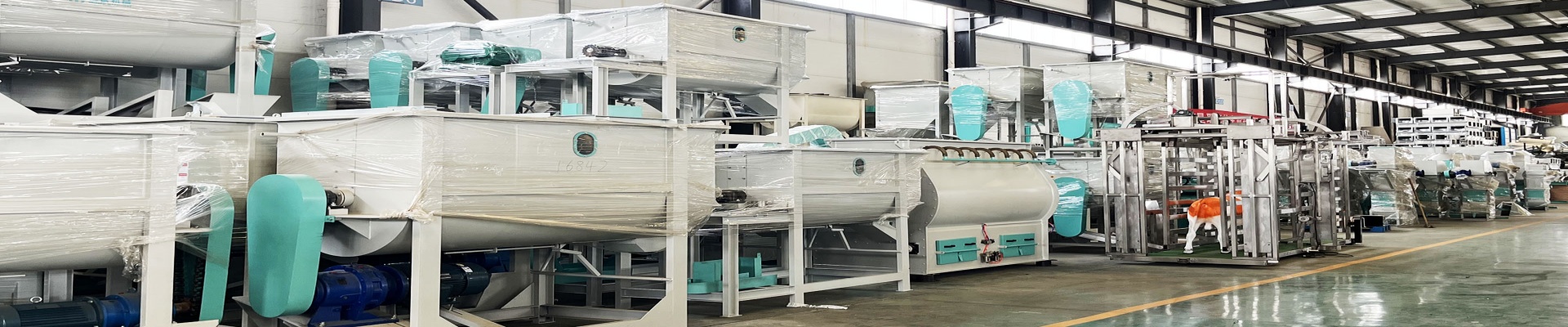
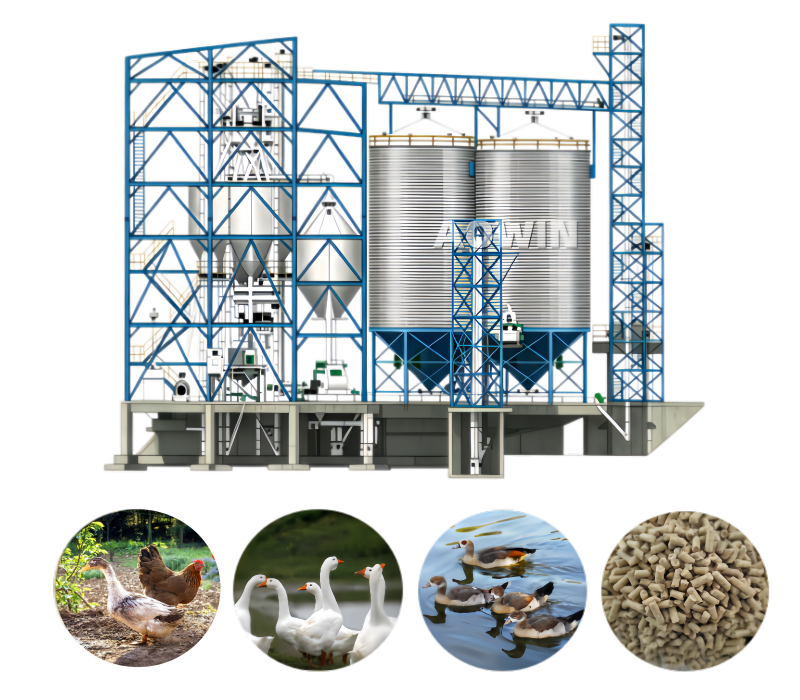
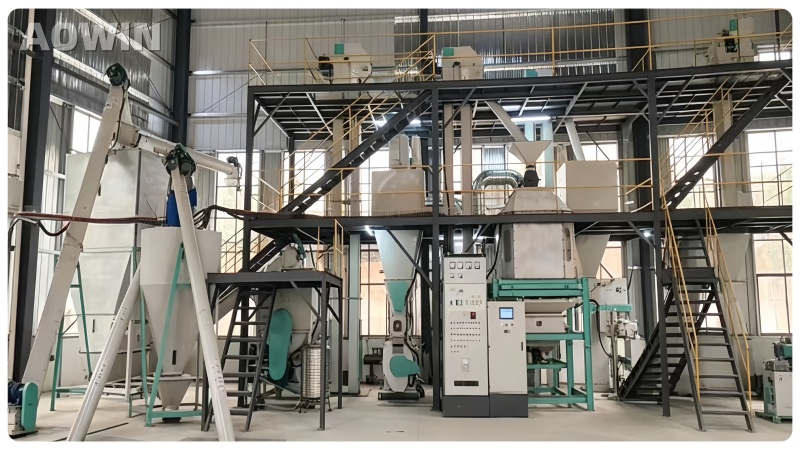
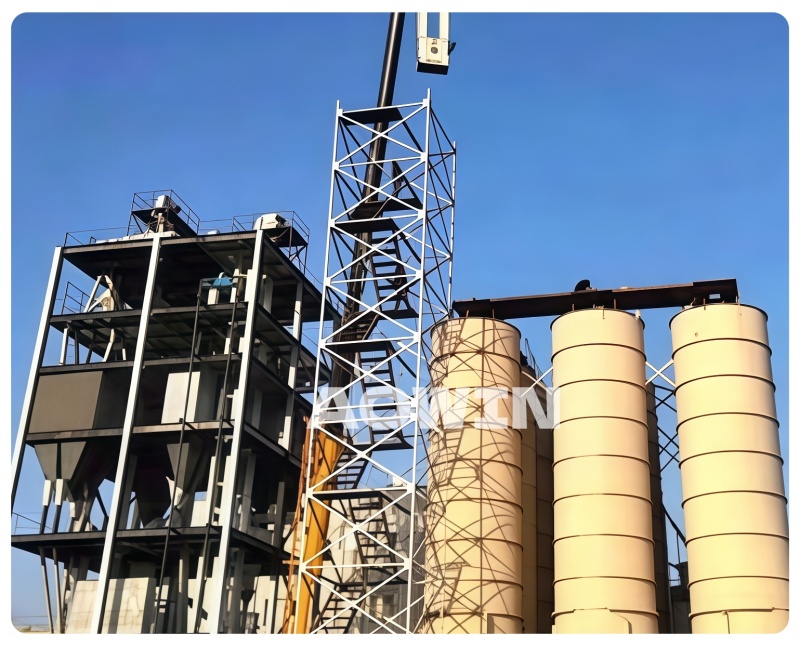
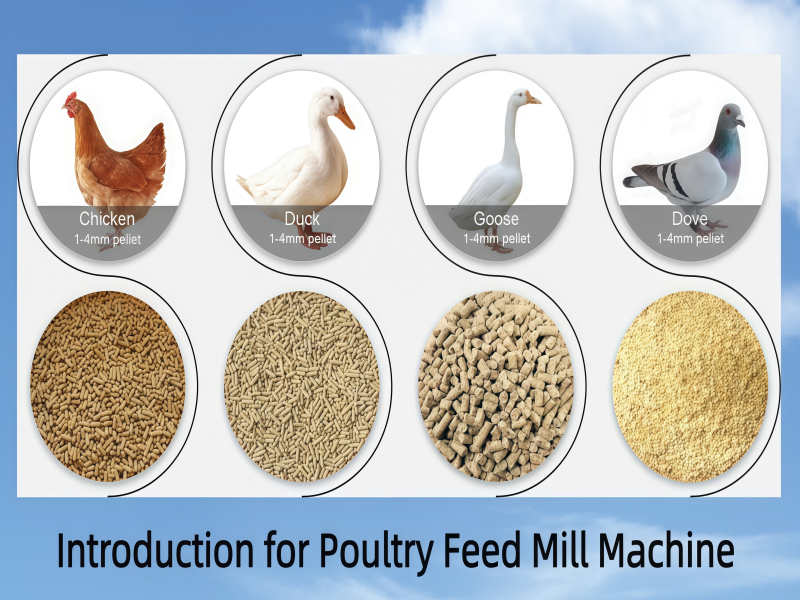
Our poultry feed manufacturing plant is specially designed to produce high-quality feed for chickens, ducks, geese, quails and other poultry. All poultry feed production equipment can be fully customized according to customers’ breeding scale and actual production needs.
Production Capacity: 1-100 tons per hour
Main Raw Materials: corn, sorghum, rye, wheat, rice bran, low-grade flour, barley, oats, cassava meal, cottonseed meal, peanut meal, bone meal, fish meal and other common feed ingredients.
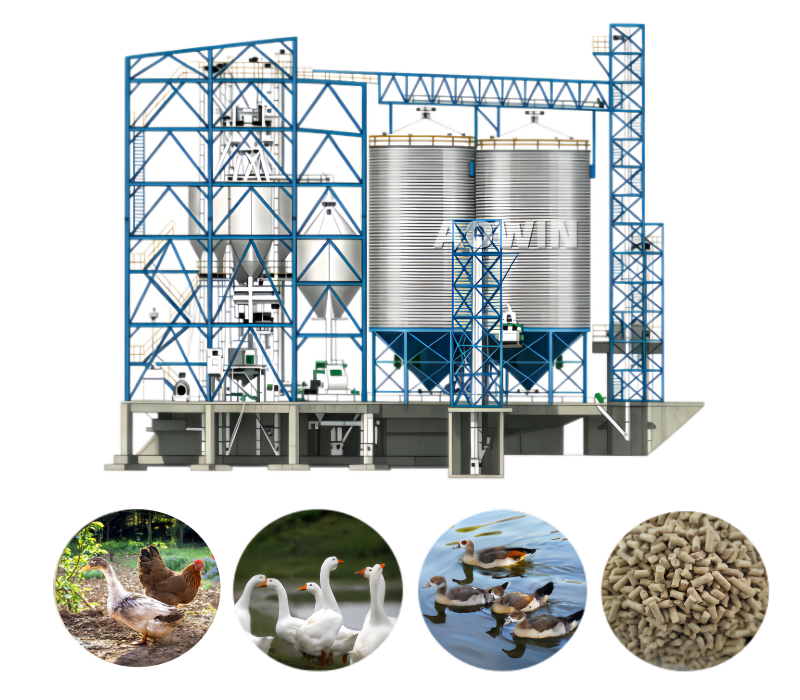
Features of the Poultry Feed Manufacturing Plant
It can produce feed pellets for various poultry including chickens, geese, pigs, ducks and birds.
It can process various feed pellets from raw materials such as corn, soybeans, sorghum, beans and fish meal.
It boasts advantages of low investment, high returns, thorough crushing, uniform mixing, convenient formula adjustment and raw material ratio adjustment to meet customers’ diverse needs.
The production line structure can be customized according to workshop conditions, with a wide range of applicable scenarios and strong adaptability.
It avoids raw material waste, improves production efficiency, saves labor costs, and enhances feeding efficiency.
The Main Equipment of the Poultry Feed Production Line
The rapid development of the breeding and feed industry has greatly promoted the progress of poultry feed manufacturing plants. Key equipment for feed pellet production includes feed grinders, feed mixers, and animal feed pellet machines, which are now more widely used and have achieved technological breakthroughs.
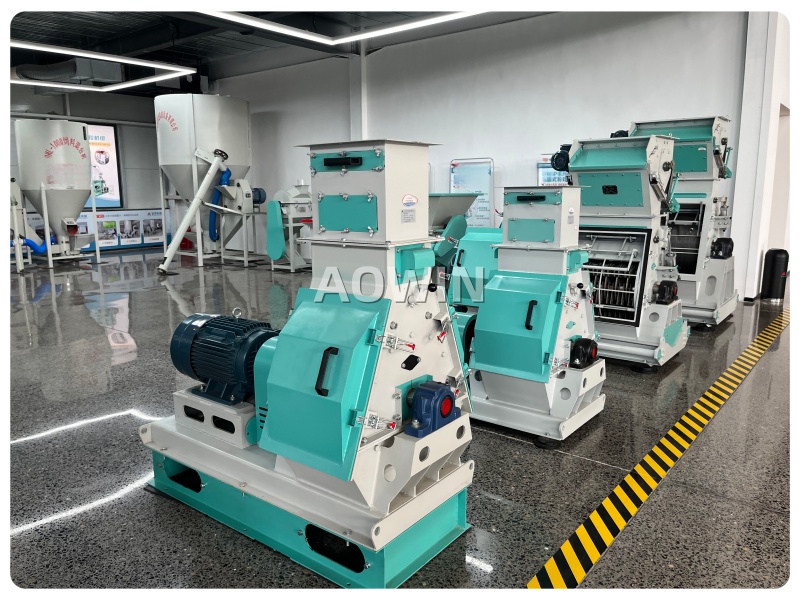
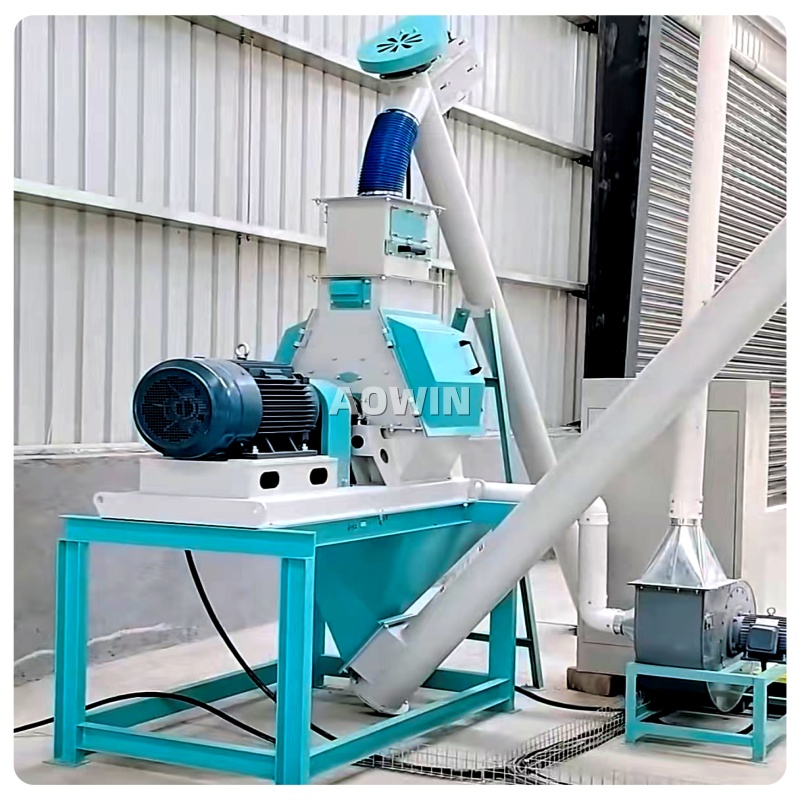
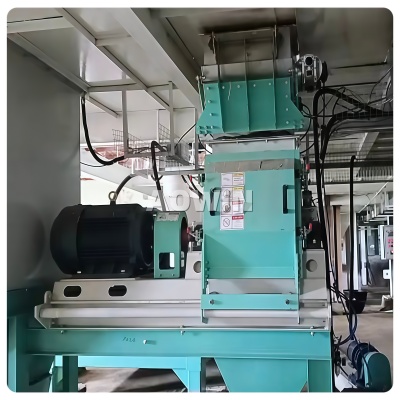
Feed Grinder MachineAs the first critical step in feed production, it crushes all large raw materials into powder. The poultry feed production line is equipped with a dedicated feed grinder machine for this purpose. Raw materials such as corn, sorghum, wheat, beans, and soybeans often come in large particles, making this crushing process essential.
Model: SFSP
Capacity: 4-10T/H
Main Power: 22-110KW
| Model | SFSP56*36 | SFSP56*40 | SFSP66*60 | SFSP66*80 |
| Capacity (t/h) | 1-3 | 2-5 | 3-8 | 4-10 |
| Power (kw) | 22 | 37 | 55/75 | 90/110 |
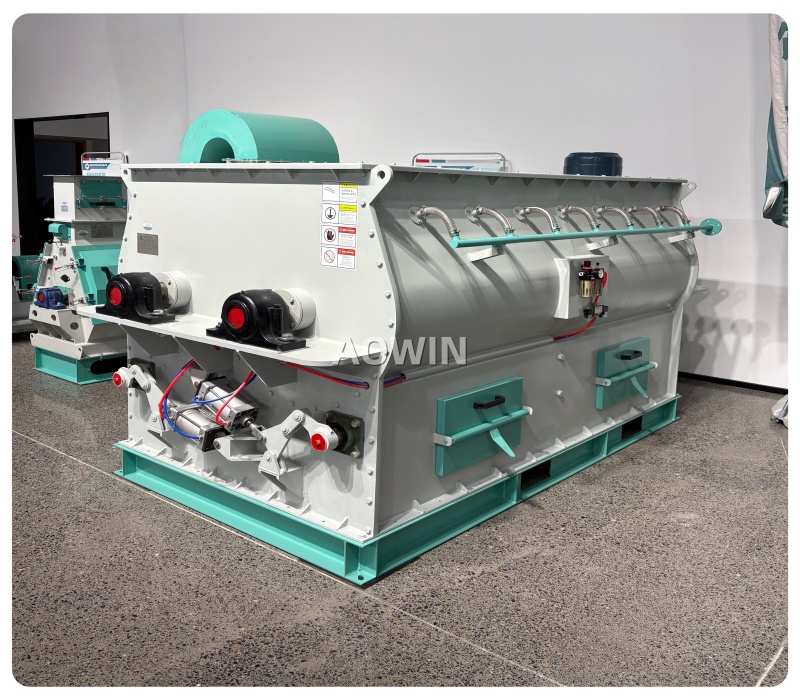
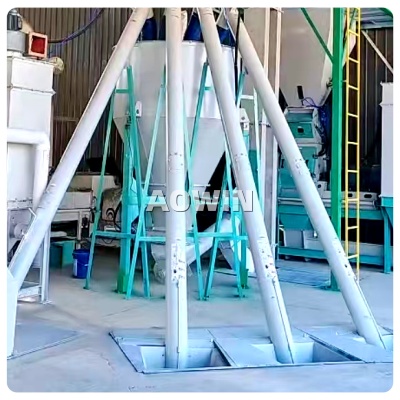
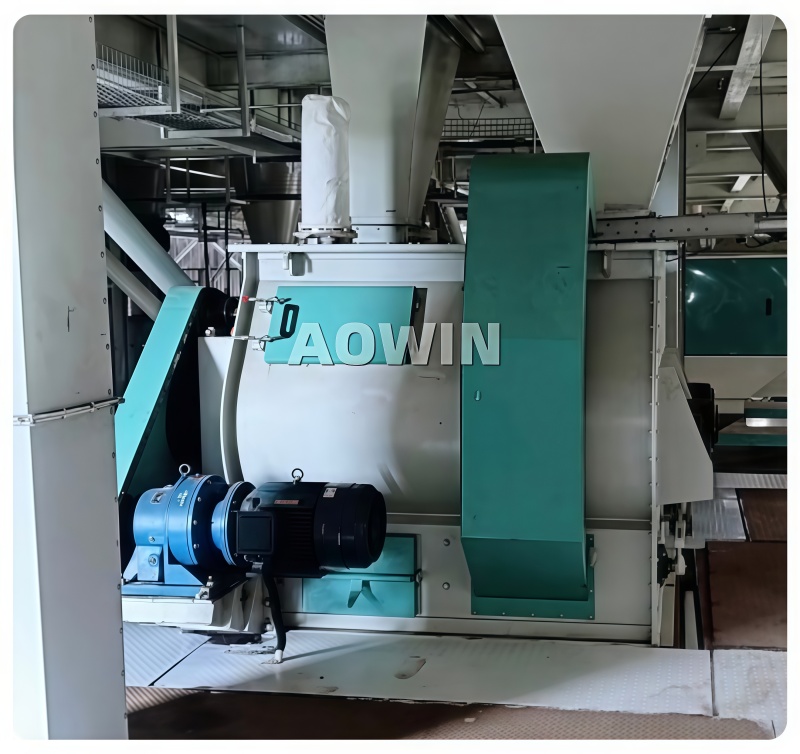
Feed Mixer MachineThis equipment is used for mixing all feed ingredients in specified proportions. All raw materials are added according to different ratios, and the feed mixer machine mixes the powder into a uniform mixture. Equipped with a large-section return air pipe, it reduces dust and prevents material residue.
Model: SSHJ
Main Power: 5.5-45KW
| Model | SSHJ0.5 | SSHJ1 | SSHJ2 | SSHJ4 | SSHJ7 |
| Power (kw) | 5.5 | 11 | 18.5 | 30 | 45 |
| Capacity (t/h) | 0.25 | 0.5 | 1 | 2 | 3 |
| Mixing time(min) | 0.5-2
| 0.5-2 | 0.5-2 | 0.5-2 | 0.5-2 |
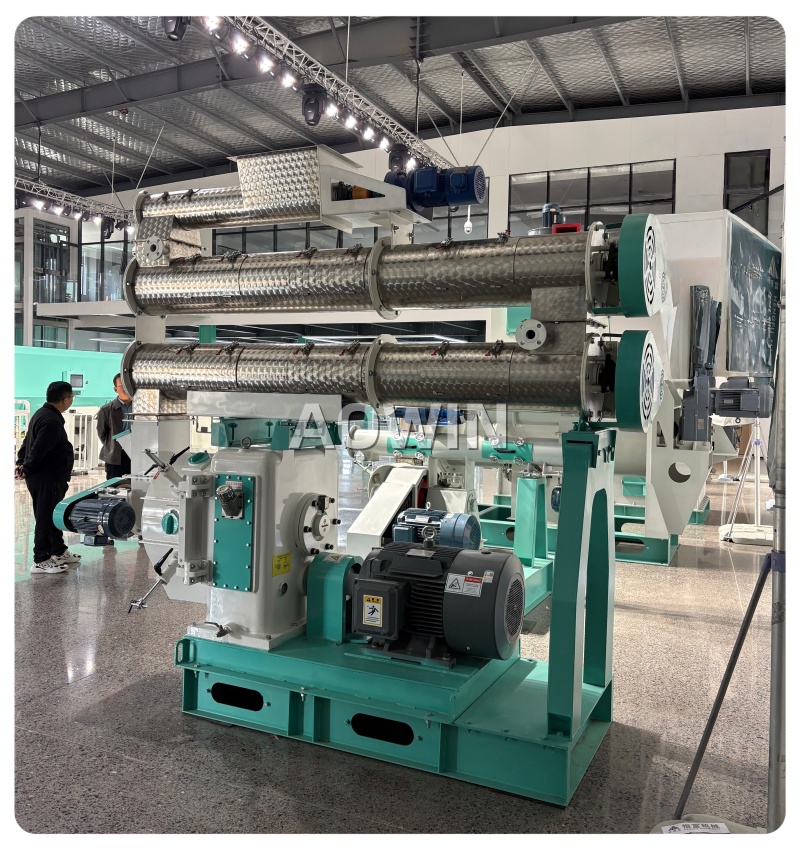
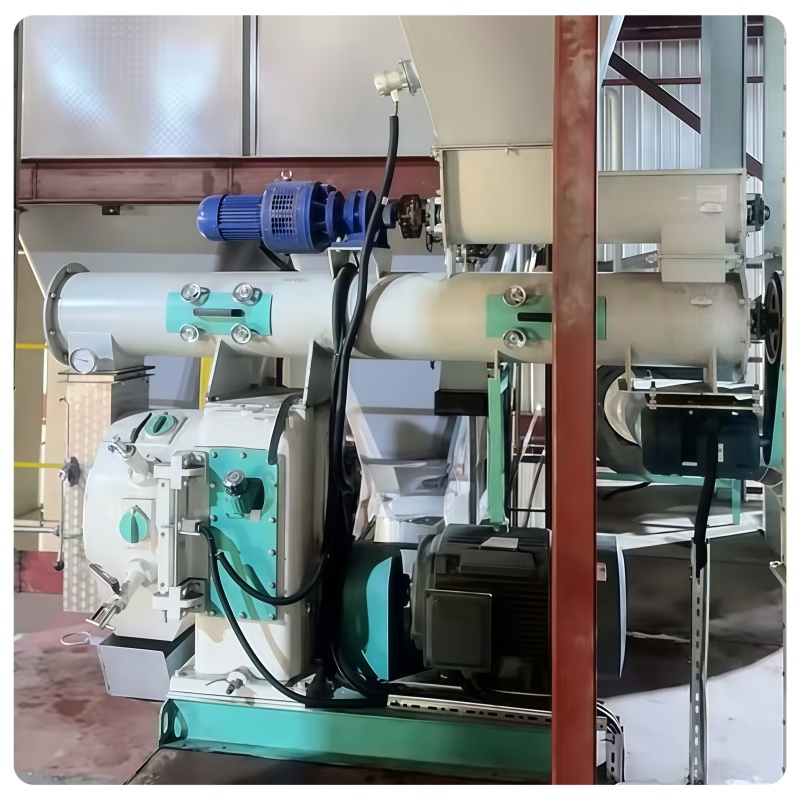
Feed Pellet Machine for SaleThis equipment presses feed into uniform pellets. Its representative model is the SZLH series poultry feed pellet making machine, which produces pellets of consistent size to ensure the provision of required nutrients and avoid feeding waste. The SZLH series ring die feed pellet making machine is widely applied in poultry feed production lines and other animal feed plants.
Model: 9KWH
Capacity: 0.5-12T/H
Main Power: 22-110KW
| Model | 9KWH250 | 9KWH304 | 9KWH320 | 9KWH350 | 9KWH400 | 9KWH420 |
| Capacity (t/h) | 0.5-1.5 | 1-3 | 2-4 | 3-6 | 5-8 | 6-12 |
Main Motor
Power (kw) | 22 | 30/37 | 37 | 55 | 75/90 | 110 |
ScrewFeeder(kw)
| 1.5 | 1.5 | 1.5 | 1.5 | 2..2 | 2.2 |
Conditioner
Power (kw) | 2.2 | 2.2 | 2.2 | 3 | 3 | 3 |
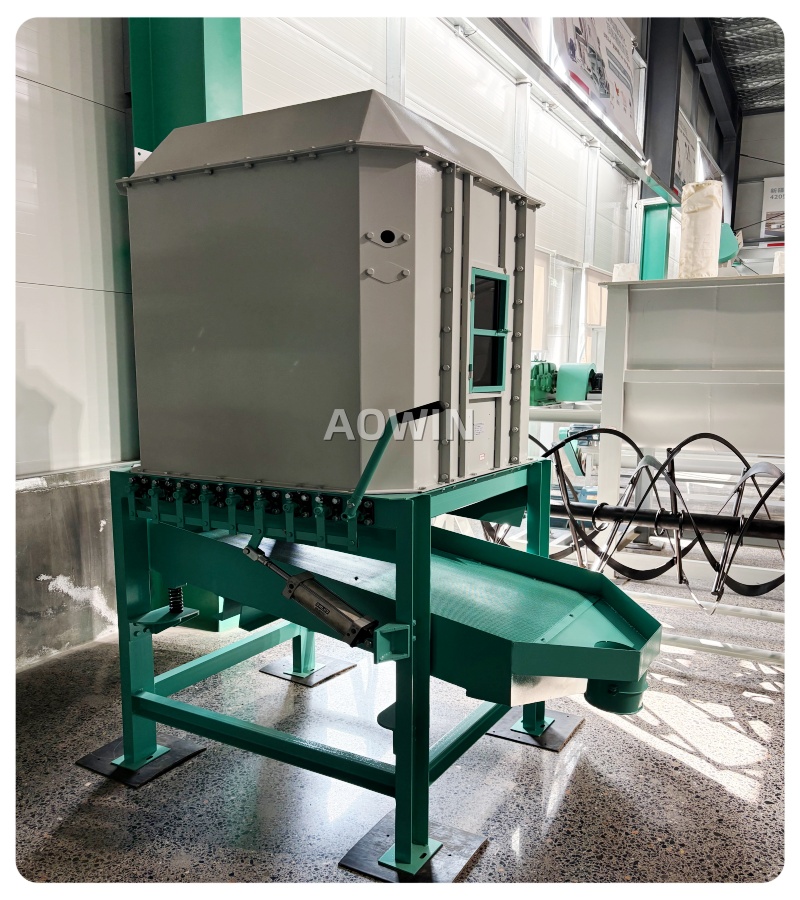
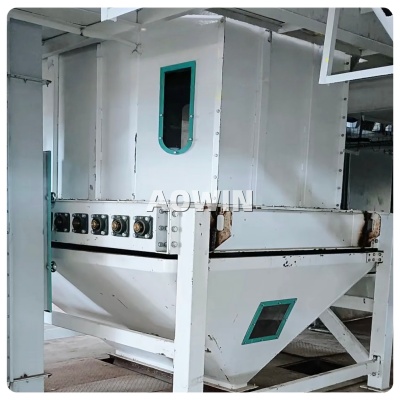
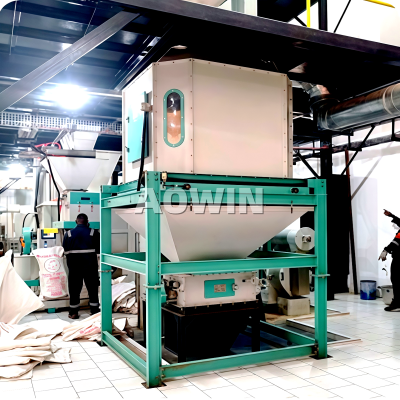
Cooling MachineAfter crushing, mixing and granulation, the next process is cooling. The SKLN series counterflow cooling machine is adopted here, featuring small volume and convenient transportation and installation. After installation, pellets pass through the cooling area, and their temperature is reduced to around room temperature.
Model: SKLN
Capacity: 1-20T/H
Main Power: 1.1-1.5KW
| Model | SKLN1.5
| SKLN2.5 | SKLN5 | SKLN7 | SKLN10 |
| Capacity (t/h) | 1-2 | 3-5 | 5-12 | 15 | 20 |
| Power (kw) | 1.1 | 1.1 | 1.5 | 1.5 | 1.5 |
Various Types of Poultry Feed Manufacturing PlantsFeed processing equipment is selected based on production scale, product variety and production process, so different types of animal feed pellets require corresponding poultry feed production line equipment.
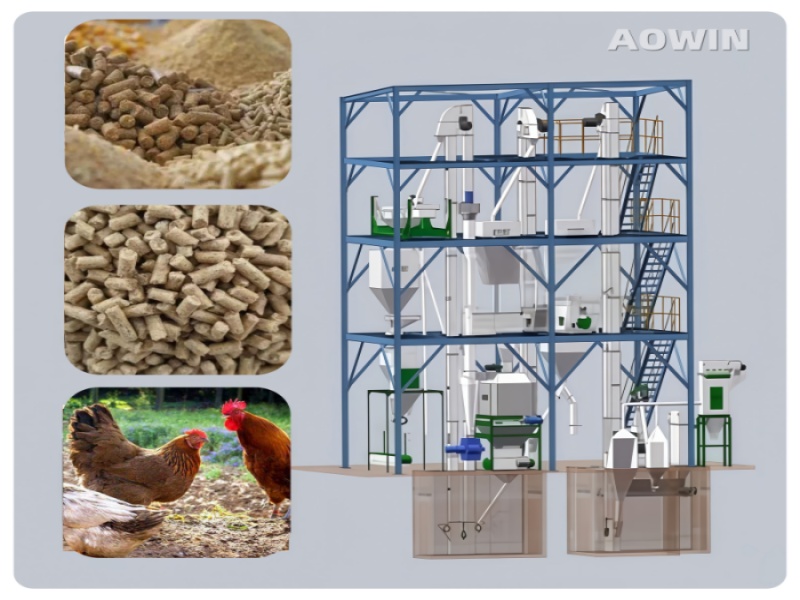
Chicken Feed Manufacturing Plant
Capacity: 1-100T/H
It is suitable for the production of feed pellets for baby chickens, broilers and hens.
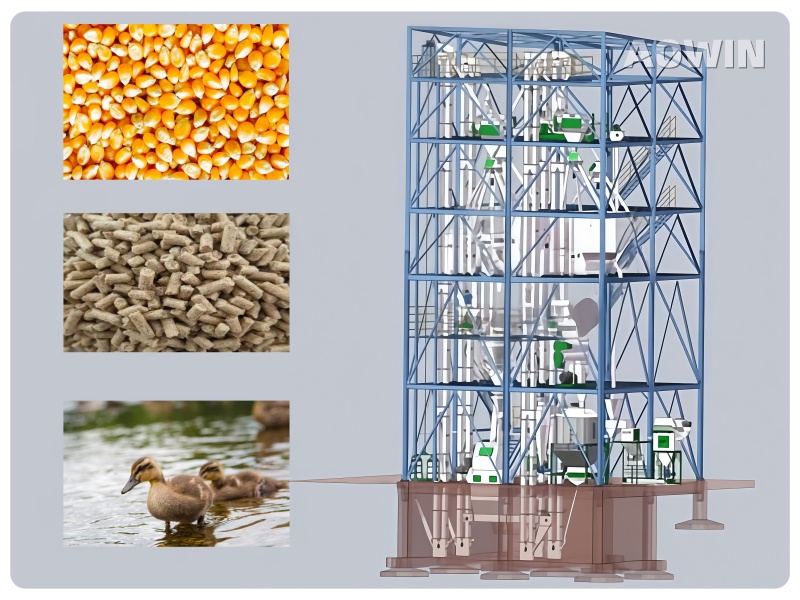
Duck Feed Processing Plant
Capacity: 1-100T/H
It is suitable for the production of 2-12mm duck feed pellets.
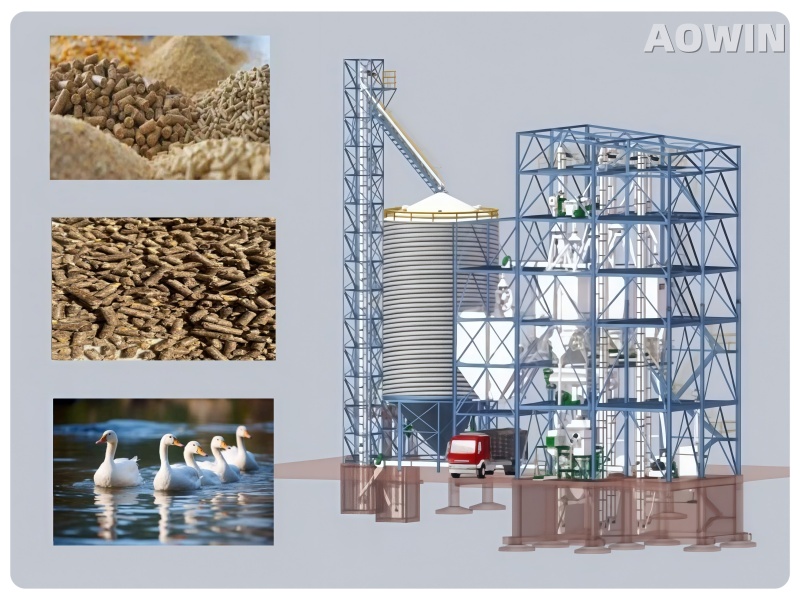
Goose Feed Production Line
Capacity: 1-100T/H
AOWIN can provide you with high-quality goose feed production lines with a capacity ranging from 1-100T/H, fully meeting your production needs.
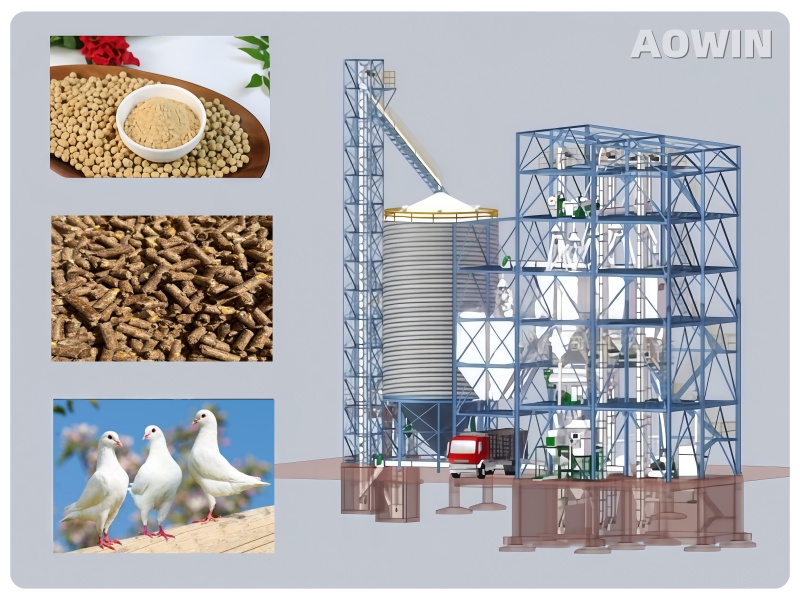
Pigeon Feed Pellet Plant
Capacity: 1-100T/H
It is suitable for the production of various bird feed pellets, perfectly meeting the feeding needs of pigeons and other poultry.
The Working Process of the Poultry Feed Production LineThe poultry feed manufacturing plant mainly consists of raw material receiving and cleaning, crushing, batching and mixing, pelletizing, cooling, screening, and finished product packaging systems. According to customers' specific needs, AOWIN Machinery can design a complete set of poultry feed production lines suitable for various poultry.
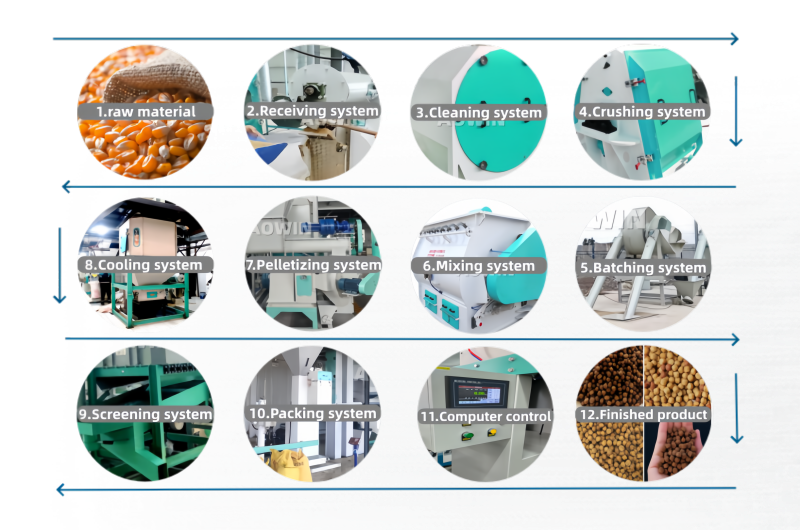
Crushing Process
Raw materials are fed into the feed grinder and crushed into powdery form, which is then conveyed to each batching bin via a conveyor. The core equipment for this process is the feed grinder. The purpose of crushing is to improve the utilization rate of animal feed, increase the contact area between digestive enzymes and raw materials, and reduce the energy consumption of animals during chewing. Additionally, the crushed raw materials are easier to mature during the pelleting and conditioning stage, significantly reducing power consumption and improving the working efficiency of subsequent processes.
Mixing Process
The raw materials weighed by the batching scale are mixed evenly. The core equipment for this process is the feed mixer machine. The mixing process needs to be well controlled: the uniformity of the mixture gradually reaches the appropriate level as the mixing time increases. However, extending the mixing time excessively will cause stratification of the raw materials. Therefore, over-mixing should be avoided, and the product should be discharged before the proper mixing time is reached, so that the mixing can be completed during the transportation process.
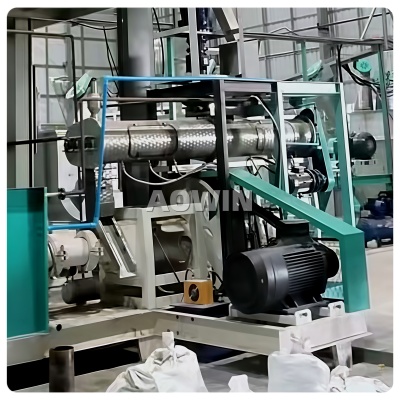
Pelletizing Process
The mixed powdered feed is processed into pellet feed. Feed granulation enhances digestibility; it also increases the density of granular materials. Through the extrusion of the feed pellet machine, the feed density is further improved, thereby boosting the storage capacity of silos. Additionally, high temperatures during the granulation process can eliminate toxins in raw materials, making the feed pellets safer for animal consumption.
Cooling and Screening Process
During the granulation process, high-temperature, humid steam and material extrusion generate a large amount of heat, resulting in feed pellets with a moisture content of 16%-18% and a temperature of 75-85℃ when they just exit the feed pellet machine. Under such conditions, the feed pellets are prone to deformation and breakage, and may also adhere and mildew during storage. Therefore, it is necessary to cool the pellets to reduce their moisture content to approximately 13-15% and their temperature to around room temperature.
After granulation, some unqualified materials such as powder clots will be produced. Thus, the feed pellets need to be screened to obtain products with neat, uniform-sized particles.
Finished Product Packaging Process
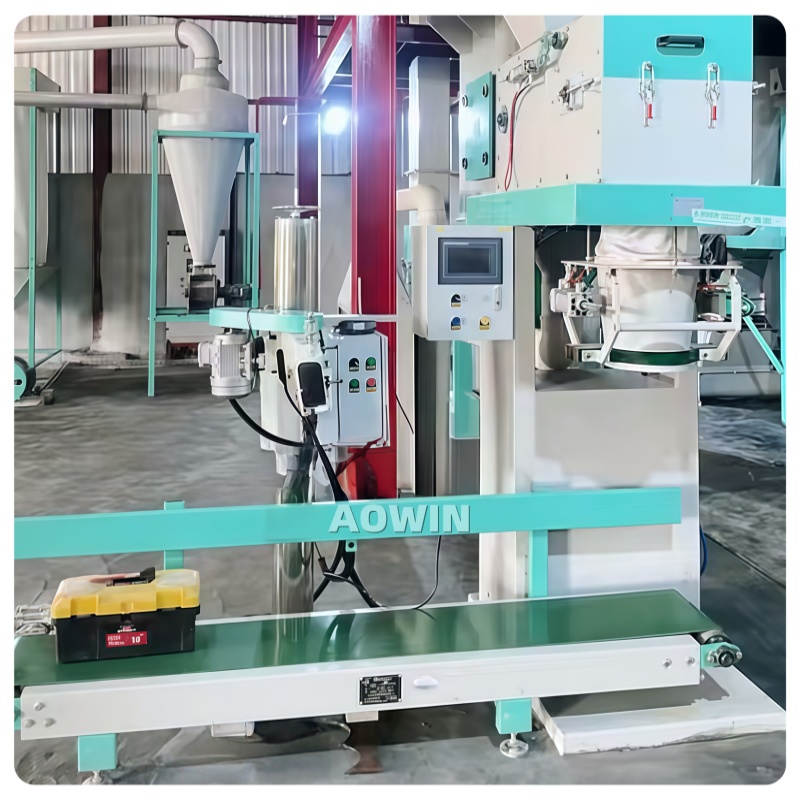
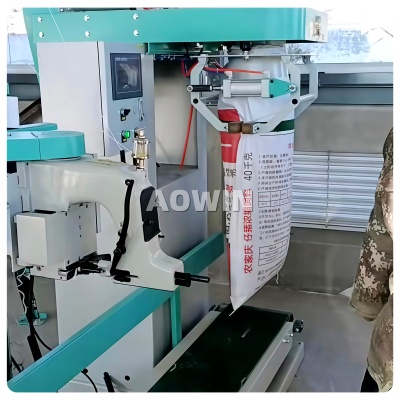
This step uses automatic packaging equipment to weigh, bag and seal finished feed pellets. Finished feeds are mainly supplied in two forms: bulk and bagged. Bagged products are more commonly adopted due to transportation constraints. The automatic packaging system supports customized weighing for feeds of various specifications to meet different client requirements.
Cases of Poultry Feed Manufacturing Plants
The animal feed pellet mills supplied by AOWIN Machinery are certified with CE, ISO and BV standards and enjoy worldwide popularity. Widely recognized by global customers, AOWIN Machinery has completed over 1200 projects across more than 76 countries. With rich practical experience, we effectively control technical risks and provide customized one‑stop solutions for you.
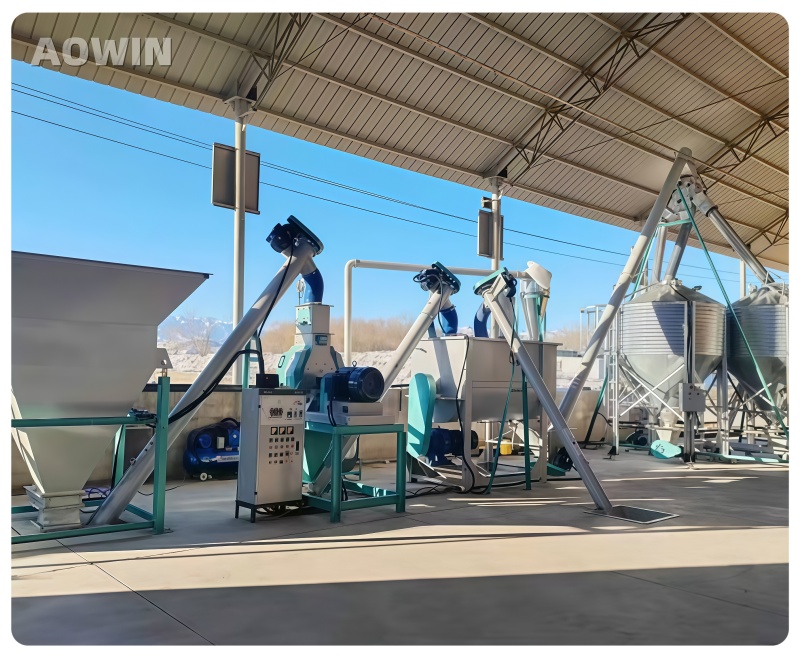
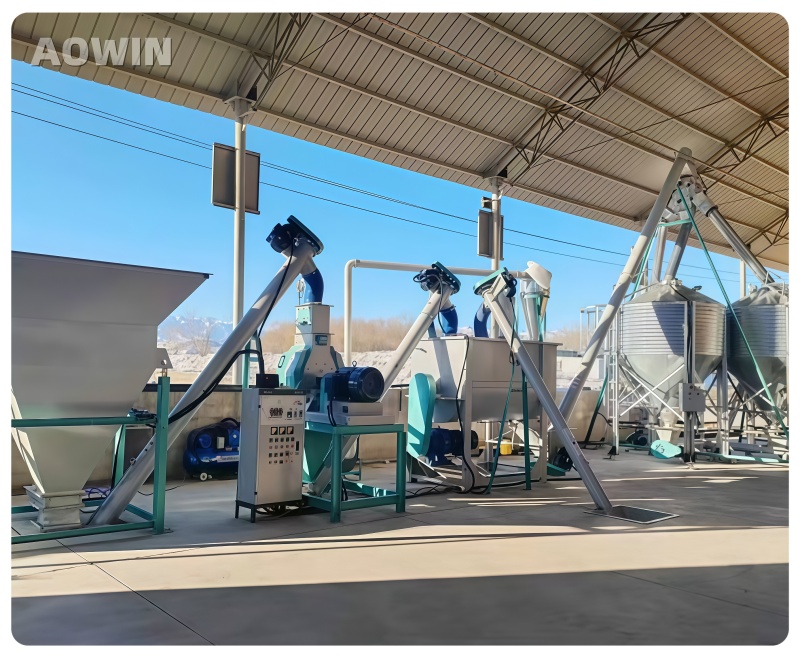
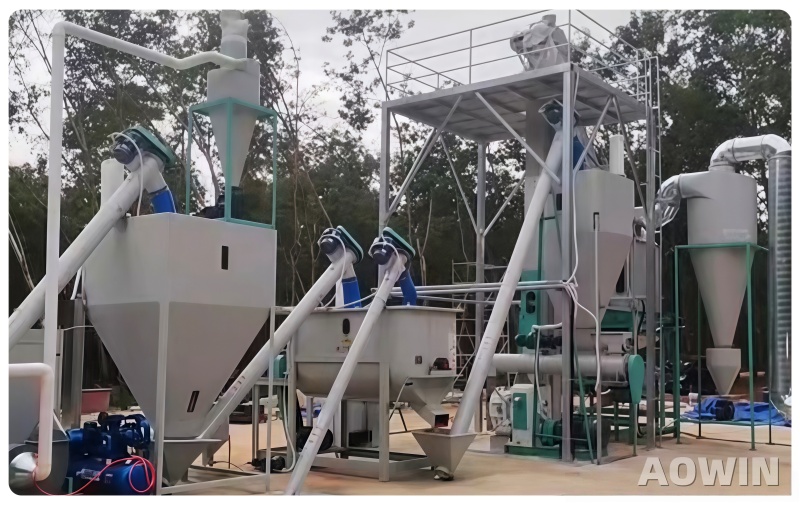
Poultry Feed Manufacturing Plant in Nigeria
A typical small-scale poultry feed manufacturing plant in Nigeria, adapted to local conditions with clear parameters.
| Project Date | February 2023 |
| Production Capacity | 1-2T/H |
| Raw Materials | Locally available in Nigeria, cost-effective grain crops
|
| Finished Pellet Specification | 1-2mm (baby chicken feed) |
| Workshop Size | 7m*3m*5m (L*W*H), compact layout |
| Operating Staff | 3 persons, easy to operate with low labor cost |
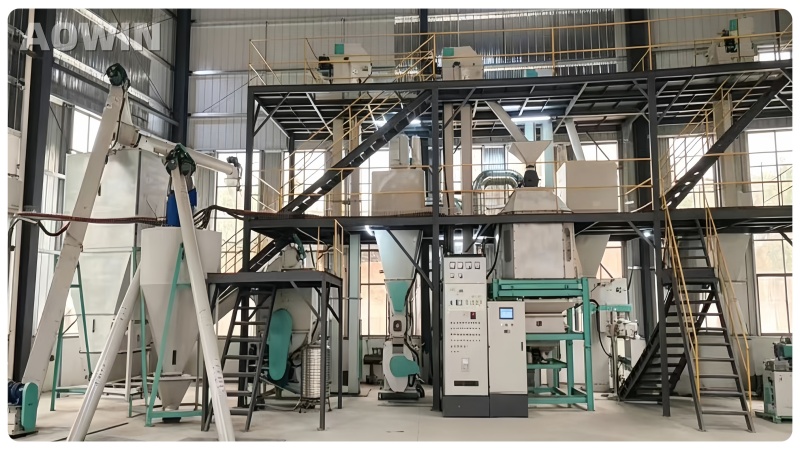
The Chicken Feed Manufacturing Plant in Uzbekistan
A typical broiler feed manufacturing plant in Uzbekistan, adapted to local conditions with clear parameters.
| Project Date | April 2024 |
| Production Capacity | 3-5T/H |
| Raw Materials | wheat, cottonseed meal, corn
|
| Finished Pellet Specification | 2-5mm (suitable for broiler feeding)
|
| Workshop Size | 11m*9m*10m (L*W*H) |
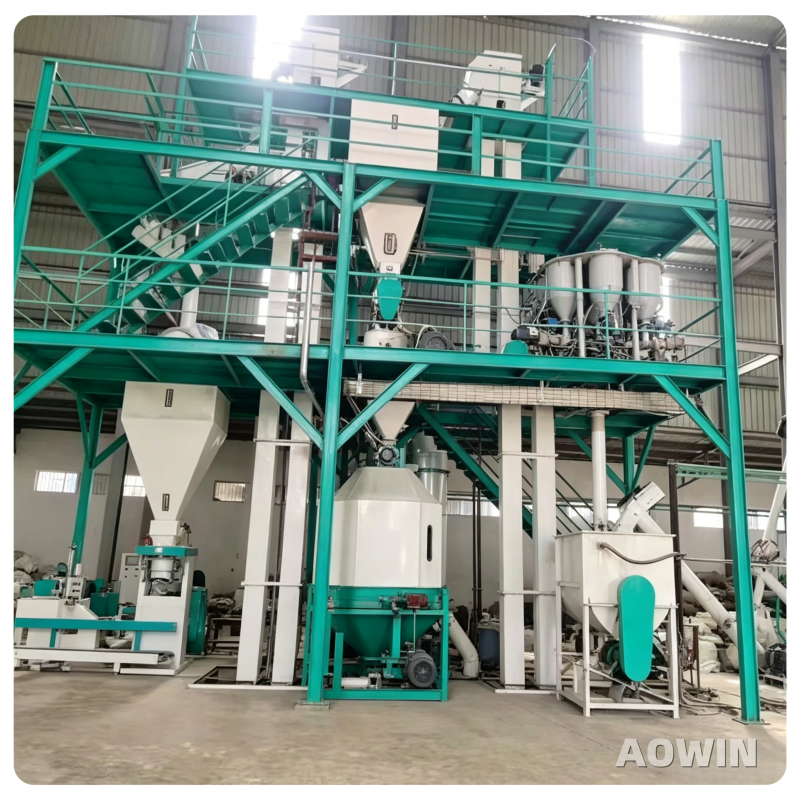
The Chicken Feed Production Line in Tanzania
This is the chicken feed production line among the three feed production lines in Tanzania, with full automation and clear operating parameters, adapted to local production needs.
| Project Date | August 2024 |
| Production Capacity | 10-15T/H |
| Raw Materials |
|
| Finished Pellet Specification | Poultry mash feed and 2-6mm feed pellets (suitable for various stages of chicken feeding)
|
| Workshop Size | 23m*12m*18m (L*W*H) |
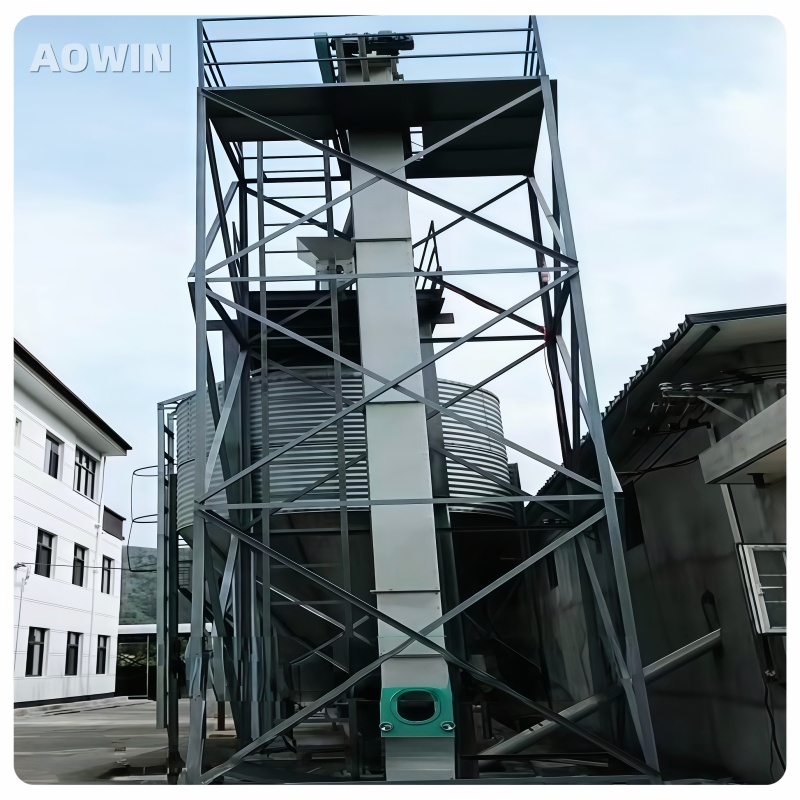
The Animal Feed Factory Project in Afghanistan
An animal feed factory project located in Afghanistan, designed to meet local cattle and chicken feeding needs, with reasonable parameters and adaptability to local agricultural resources.
| Project Date | February 2025 |
| Production Capacity | 10-15T/H |
| Raw Materials | grass, lucerne, soybean meal, corn, etc
|
| Finished Pellet Specification | 1-8mm cattle and chicken feed, applicable to different growth stages of cattle and chickens.
|
| Workshop Size | 16m*11m*23m (L*W*H) |
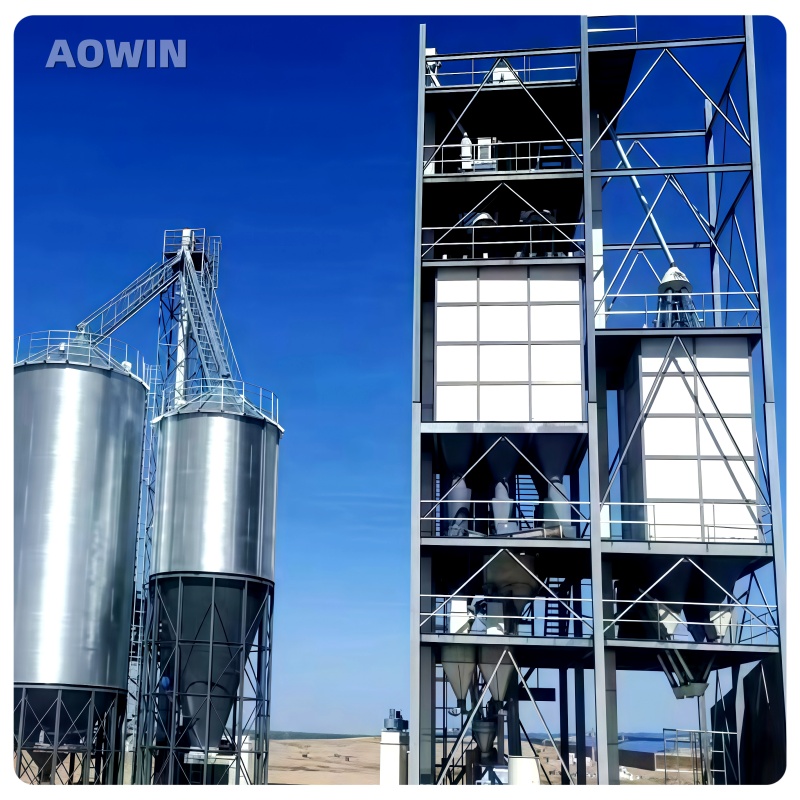
Complete Chicken Feed Manufacturing Plant in China
A complete set of chicken feed manufacturing plant located in China, with large production capacity and comprehensive specifications, adapting to the large-scale chicken breeding industry needs in China.
| Project Date | November 2025 |
| Production Capacity | 40-60T/H |
| Raw Materials | corn, soybean meal, rapeseed meal, fish meal, distillers grains
|
| Finished Pellet Specification | 2-4mm feed pellets and premix powder, suitable for various growth stages of chickens.
|
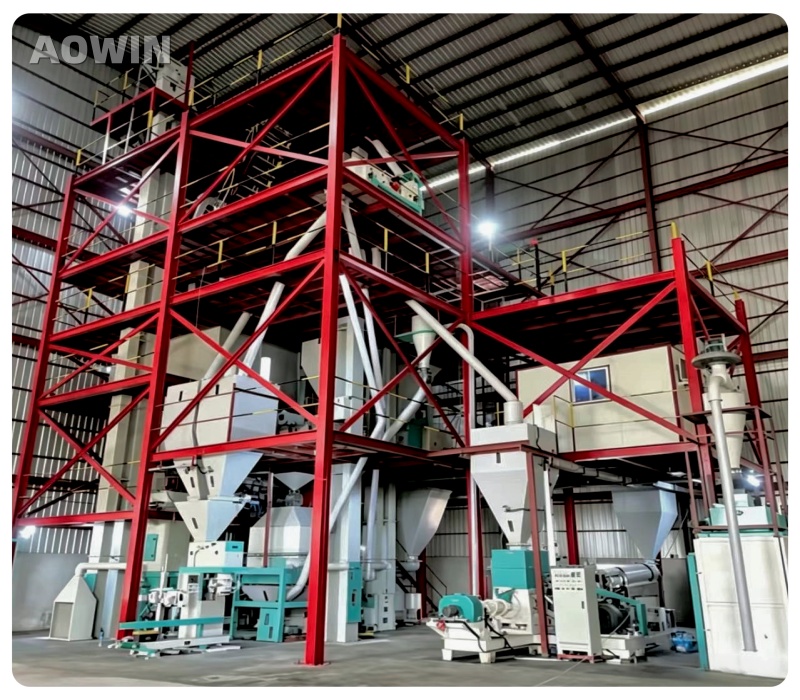
The Chicken Feed Production Line in South Africa
A chicken feed production line located in South Africa, designed in line with local agricultural resources and breeding needs, with stable performance and clear operating parameters
| Project Date | July 2024 |
| Production Capacity | 10-15T/H |
| Raw Materials | corn, wheat, soybean, and other grain
|
| Finished Pellet Specification | 2-6mm chicken pellets, suitable for various growth stages of chickens
|
| Workshop Size | 22m*11m*15m (L*W*H) |
AOWIN Technology
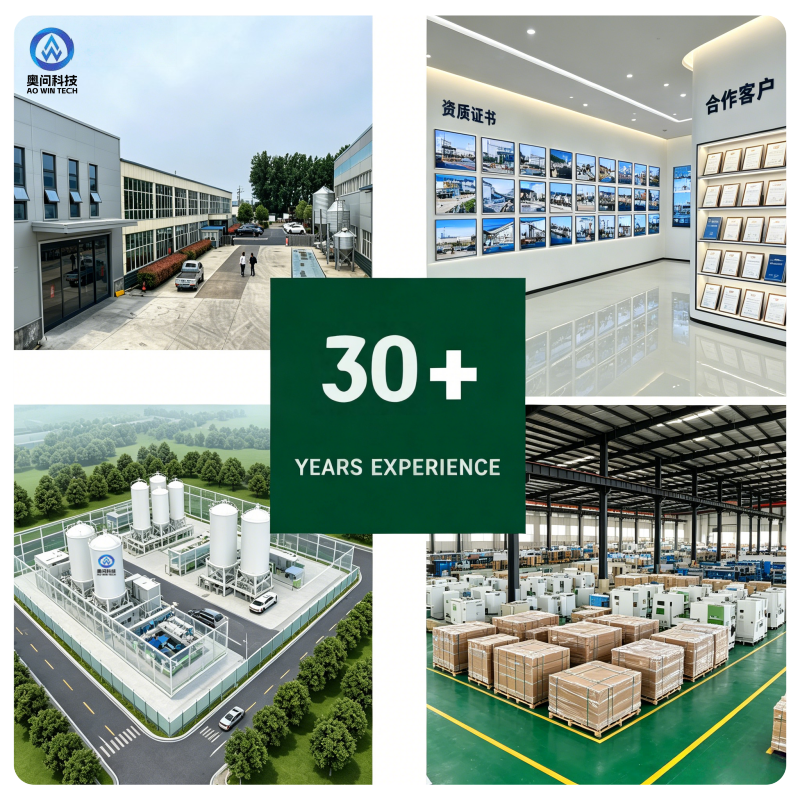
With over 32 years of industry experience, AOWIN Technology is capable of providing customers with tailored solutions and recommendations. AOWIN pellet machines are sold in numerous countries and regions worldwide, including Europe, Asia, Oceania, North America, South America, and the Middle East.
AOWIN Technology boasts a robust quality control system. We assign dedicated personnel to conduct strict inspections, eliminating potential quality hazards and ensuring no unqualified machinery leaves our factory. All equipment undergoes rigorous testing before delivery, enabling every customer to use our high-quality equipment and maximize their interests and returns.
AOWIN Technology boasts a robust quality control system. We assign dedicated personnel to conduct strict inspections, eliminating potential quality hazards and ensuring no unqualified machinery leaves our factory. All equipment undergoes rigorous testing before delivery, enabling every customer to use our high-quality equipment and maximize their interests and returns.
FAQ of Poultry Feed Manufacturing Plant
Q: Is poultry feed manufacturing profitable?
A: With the growing demand for high-quality poultry feed, investing in a poultry feed manufacturing plant is always a profitable venture. It has evolved from small-scale production to a global industry, with many countries operating large-scale poultry feed production. For a long time, countries such as the United Kingdom, Brazil, the Philippines, Greece, the United States, Thailand, and various South American nations have been major producers of poultry feed worldwide.
This business is highly suitable for entrepreneurs, especially those located near poultry farms or agricultural communities. All that is required is a complete set of poultry feed production line equipment.
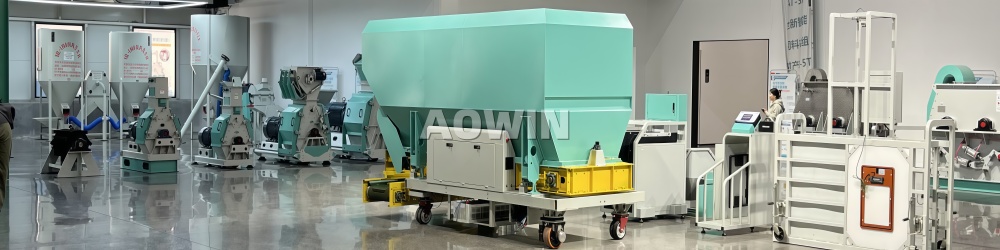
The feed pellet processing machinery features high-temperature sterilization and disinfection during operation, effectively ensuring the safety of poultry feed. Therefore, the advantages of investing in a poultry feed production line are clear and prominent.
The Purposes of Conditioning
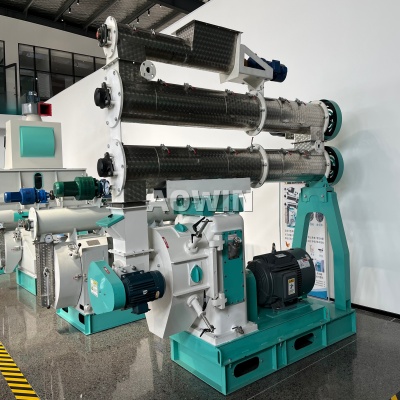
Conditioning is a key link in the production of granular feed, and its effect directly determines the quality of feed pellets. After the powder is discharged from the feed mixer and before entering the pelletizing chamber of the feed pellet machine, the conventional treatment method for the powder is to inject steam into the conditioner to fully mix the feed and steam.
The Conditioner
The functions of conditioning are as follows:
Promote starch gelatinization and improve the digestibility of feed.
Endow the conditioned feed with certain adhesiveness, which is conducive to pellet formation.
Softens the feed and plays a lubricating role, thereby extending the service life of the ring die.
Eliminate bacteria harmful to animals.
Adjust and improve the moisture content of feed pellets.
Enhance the granulation performance of materials, increase production output, reduce granulation energy consumption, and prolong the service life of the feed pellet machine.
How to Set Up a Poultry Feed Factory?
Before launching your poultry feed manufacturing plant, it is crucial to develop a comprehensive business plan, as a well-thought-out plan will guide you in making informed decisions. Key considerations to include in your plan are: the intended capacity of your poultry feed production line and your strategy for raw material procurement.
01 Choose an Optimal Location for Your Poultry Feed Production Line
When venturing into the poultry feed processing business, selecting the right factory location is essential. Poultry feed processing plants require specific site conditions, and the most prudent choice is to locate the plant near concentrations of poultry farms. This ensures a ready market for your finished products, reducing transportation costs and improving market accessibility. Additionally, you need to verify the availability of a stable water supply near the site and ensure there is sufficient space to accommodate future business expansion.
02 Procure Poultry Feed Plant Equipment and Machinery
If you are unsure where to source poultry feed production machinery, conducting online research is a practical way to identify the best equipment suppliers. This research will help you compare options and determine which supplier can offer the most favorable pricing for your required poultry feed production line. Once you have identified a potential partner, you can consult with them to customize the most suitable poultry feed manufacturing equipment based on your specific needs.
LEAVE YOUR NEED
Please leave your specific requirements and inquiries here! Our professional team will promptly send you detailed technical information and a formal quotation to meet your needs.